
A baby quilt has no fixed size. Most fall between 30 x 40 and 36 x 52 inches, and 36 by 45 is a handy middle. Make it of cotton with a thin cotton or cotton-blend batting, in a layout simple enough to finish in a weekend or two: squares, strips or half-square triangles. Keep it flat, washable and free of anything that could come loose. And plan it for the floor, the stroller and the lap. A quilt is not bedding for an infant, which is covered near the end of this guide.
What Size to Make
Size follows use.
| Use | Typical size (inches) | Why |
|---|---|---|
| Stroller quilt | 30 x 40 (76 x 102 cm) | Covers a lap without trailing near the wheels |
| Play mat for the floor | 36 x 36 to 40 x 40 (91 to 102 cm square) | Square, so it works in any direction |
| All-purpose baby quilt | 36 x 45 (91 x 114 cm) | Big enough to grow with the child for a few years, small enough for one width of backing |
| Crib or toddler bed quilt | 36 x 52 (91 x 132 cm) | The size most charts give for a crib quilt (the mattress is about 27 1/2 x 52 inches); used as bedding from toddler age |
There is a practical reason so many baby quilts are 36 inches wide. Quilting cotton has 40 to 42 usable inches, and the backing should be about 3 inches larger than the top on every side. At 36 inches the backing is a single piece with no seam. Go wider and you have to piece the back or buy a wider fabric.
The quilt sizes chart shows where these sit among lap, throw and bed sizes.
Fabric for the Top and the Back
Quilting cotton is the right choice for the top. It is stable, it washes well and it softens with every wash. Prewash strong colors, especially reds and navy next to white, so loose dye comes out before the quilt is made.
For the back you have three good options:
- Quilting cotton. The easiest to handle, and it shrinks at the same rate as the top.
- Cotton flannel. Soft and warm. It tends to shrink more than quilting cotton, so prewash it.
- Minky. A plush polyester knit that makes a very soft back. It is sold 58 to 60 inches wide, enough to back a baby quilt without a seam. It stretches and slides, so baste closely and use a walking foot. It does not shrink with the cotton top, which means less of the crinkled look.
What to Leave Off
Skip buttons, beads, pompoms, sequins, ribbon loops and anything else sewn on top. On a baby quilt every decoration should be fabric, stitched flat. Fusible appliqué is fine as long as the edge of every shape is sewn down all the way around; do not rely on the adhesive alone.
Batting: Thin and Washable
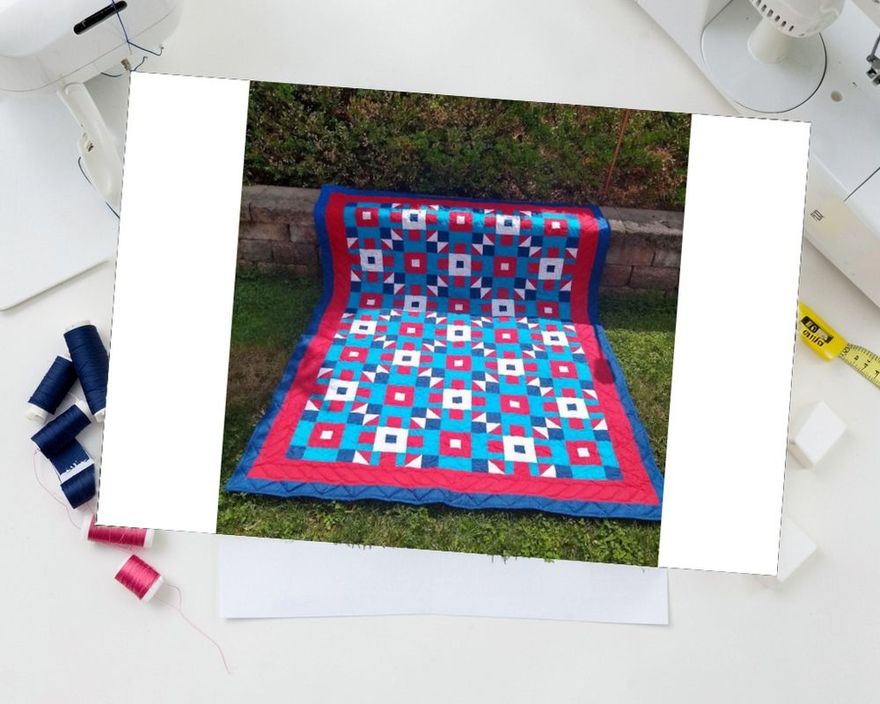
Choose a low-loft batting. Thin batting makes a flat quilt that folds small and lies smooth on the floor.
- Cotton or a cotton-polyester blend is the default. It is soft, it washes well, and it shrinks about 3 to 5 percent in the first wash, which gives a quilt its puckered texture. Hobbs, a batting maker, suggests its 80/20 cotton-polyester blend or a polyester batting for children's quilts, because they are washed so often.
- Polyester does not shrink, so the quilt stays smooth instead of crinkled. Stay with a low-loft type; the puffy kind is harder to quilt and bulky to carry.
The package states the maximum distance allowed between lines of quilting, anywhere from about 4 to 10 inches or more depending on the product. Treat that as a limit, not a target, for a quilt that will be washed every week.
Four Simple Layouts With the Math Done
Each of these makes a top of about 36 by 45 inches with seams a beginner can manage.
Squares From 5-Inch Precuts
A 5-inch square finishes at 4 1/2 inches. Eight across and ten down is 80 squares and 36 x 45 inches. Packs of precut 5-inch squares, sold as charm packs, typically hold 42, so two packs give 84 and leave four spare; check the count on the label.
Lay all the squares out on the floor before sewing, move them until no two matching prints touch, then sew them into rows and join the rows.
Horizontal Strips
Cut strips 2 1/2 inches wide across the width of the fabric and trim each one to 36 1/2 inches long. Each finishes 2 inches wide, so twenty-two strips, sewn together along their long edges, make a top of 36 x 44 inches. A precut roll of 2 1/2-inch strips typically holds 40, which is more than enough. Wider strips work too, if the finished widths add up to your length.
Sew each long seam in the opposite direction from the one before it. Starting every seam at the same end makes a set of strips bow into a curve.
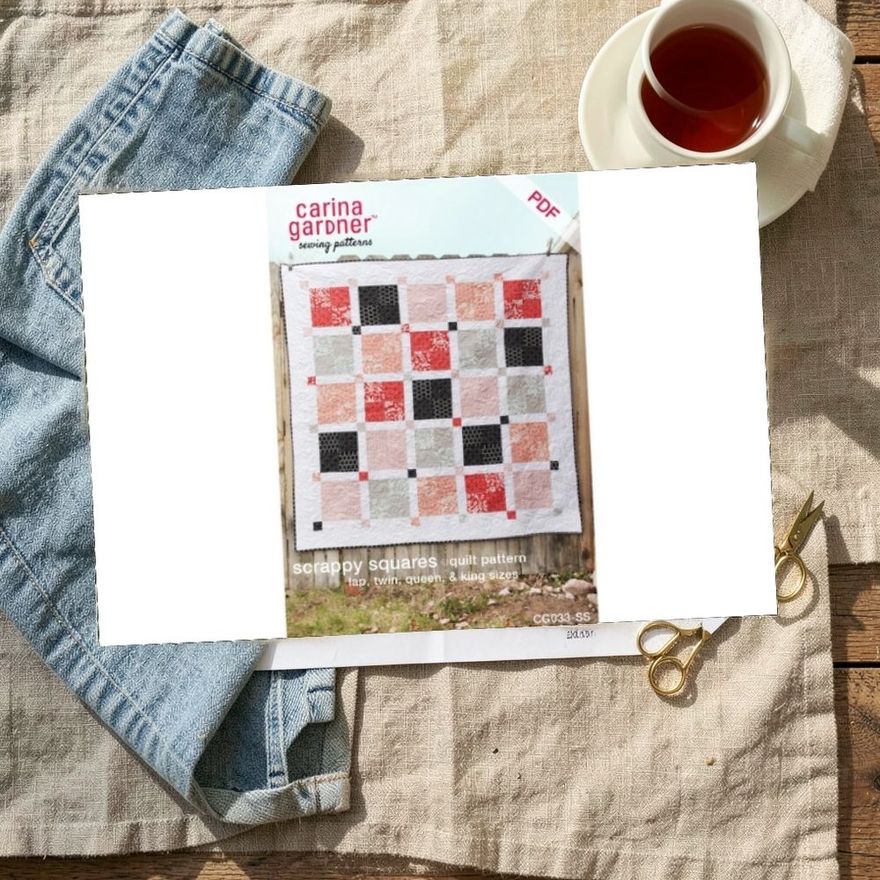
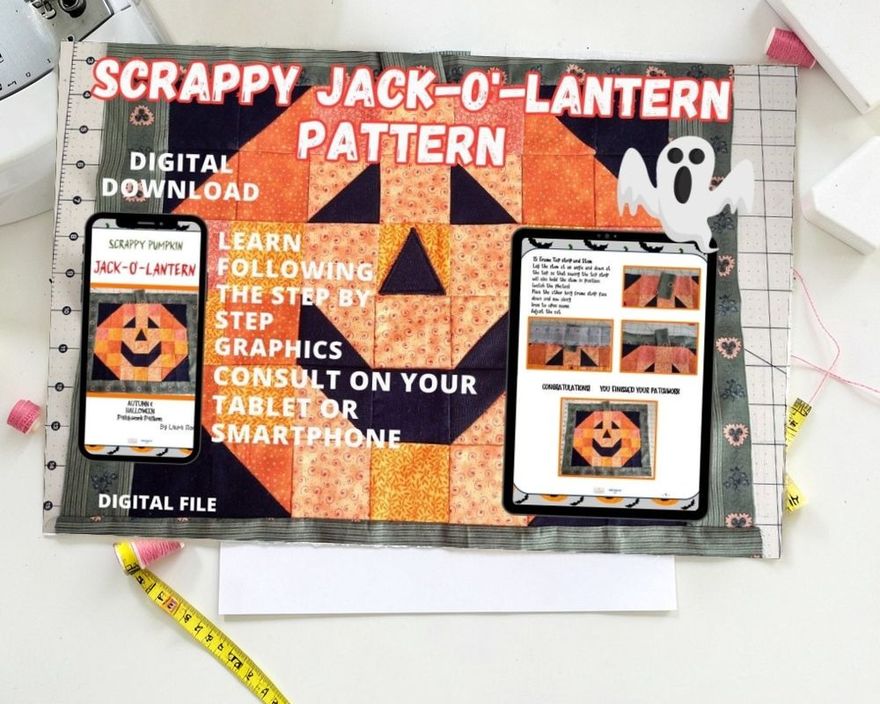
If you would rather follow a written pattern, the three below are square-based patchwork designs, going by their names. Check the finished size in each listing: a design written for a throw can often be cut down by leaving out rows.

Scrappy Squares Quilt
See the listing ↗
Persimmon Nine Patch Quilt
See the listing ↗
Simply Modern Patchwork Quilts
See the listing ↗From the collection Quilt Patterns. New Creative Fabrica members get 10 free downloads, and any of these can be one of them.
Half-Square Triangles From 10-Inch Squares
Pair ten light 10-inch squares with ten dark ones. Draw a diagonal on the back of each light square, sew 1/4 inch from the line on both sides, cut on the line and press. Each pair gives two units that measure about 9 1/8 inches; trim them to 9 inches square.
Twenty units set four across and five down make 34 x 42 1/2 inches, since each unit finishes at 8 1/2. A border cut 1 1/2 inches wide brings that to 36 x 44 1/2. The same twenty can be turned to form zigzags, diamonds or large pinwheels, so arrange them on the floor and take a photo of each version before choosing. The method is explained in more detail in eight classic quilt blocks.
One Block, Repeated
Any block you like can become a baby quilt. Nine 12-inch blocks set three by three make a 36-inch play mat, and twelve of them make 36 x 48. Smaller blocks need more repeats or a border to reach the same size.
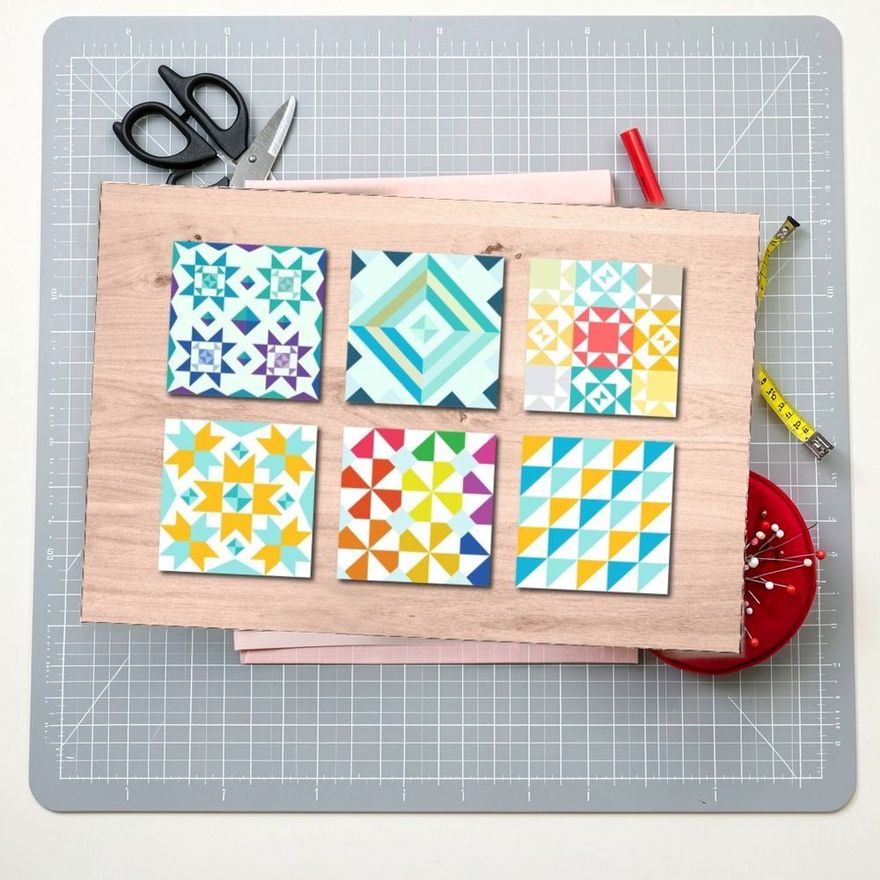
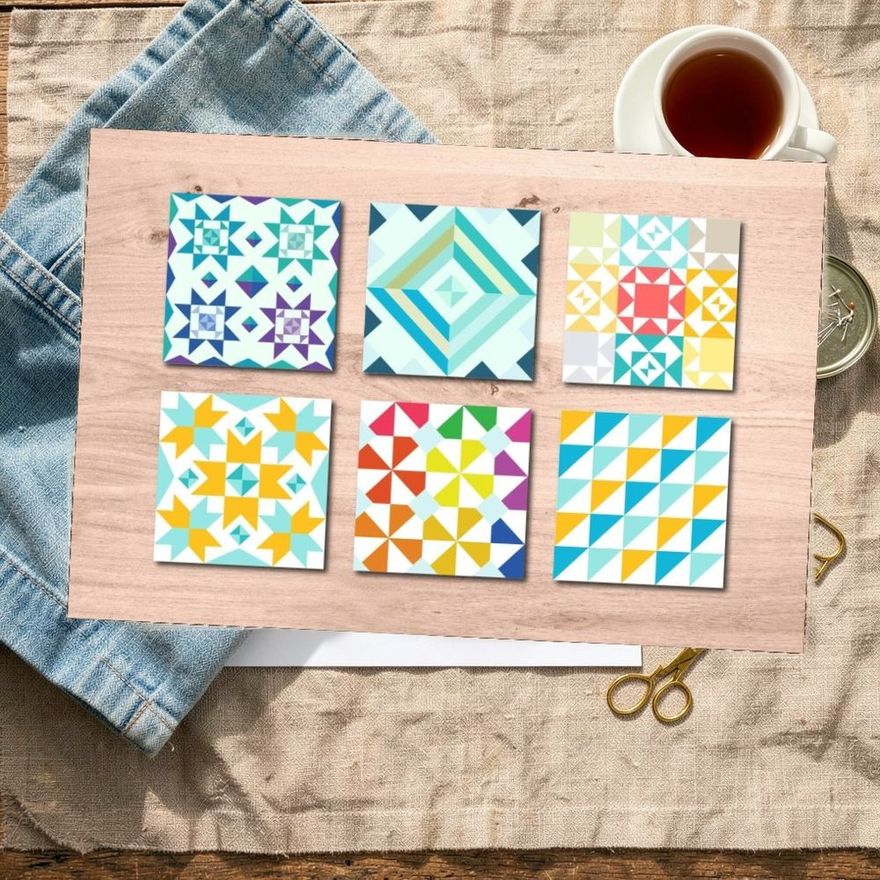
Single-block patterns are sold on their own for exactly this. The two below are a patchwork windmill block and an appliqué hearts block; check the block size in each listing before working out how many you need.

Windmill Designer Pinwheel Patchwork Quilt Block
See the listing ↗
Two Hearts Designer Pinwheel Appliqué Quilt Block Pattern
See the listing ↗From the collection Quilt Blocks. New Creative Fabrica members get 10 free downloads, and any of these can be one of them.
Quilting and Binding for a Quilt That Gets Washed
A grid or parallel lines 2 to 3 inches apart hold the layers securely and leave the quilt soft. That is well inside the limit of any batting; Fairfield, for instance, calls 2 to 4 inches safe for all of them. Very dense quilting is durable but makes a stiffer quilt.
Basting and quilting are described in quilting for beginners. A baby quilt is small enough to baste on a table and to turn easily under a home machine.
For the edge, a machine-finished binding is the practical choice: it is quick and holds up to frequent washing. How to bind a quilt shows both methods; a 36 x 45 quilt takes five strips.
If you add a label with a name and a date, sew it down on all four sides like any other patch.
Washing and Care
Wash the finished quilt before you give it. Washing removes marking pen, basting spray and the sizing in new fabric, and it shows up any seam that needs restitching while you can still fix it.
- Use a gentle cycle in cool or lukewarm water with a mild detergent. Cold water keeps the shrinkage of cotton batting to a minimum.
- Add a color-catcher sheet to the first wash if the quilt combines strong colors with white.
- Tumble dry on low, or dry flat.
Include those instructions on a small card. A baby quilt is washed often, and a cotton one only gets softer for it.
A Quilt Is for Play and Cuddles, Not for Sleep
The American Academy of Pediatrics says to keep soft objects and loose bedding out of a baby's sleep area, and its list names quilts along with pillows, comforters, blankets, toys and bumper pads. The sleep surface should be firm and flat, with a fitted sheet and nothing else. The recommendations cover babies up to 1 year of age. For warmth, the AAP suggests layers of clothing or a wearable blanket. All of that applies to a handmade quilt as much as to any other bedding.
So a baby quilt has other jobs. It is a clean surface for floor play and tummy time while the baby is awake and watched, a cover over the legs on a stroller walk, a wrap for cuddling in someone's arms, or a wall hanging in the nursery. When the child moves to a toddler bed, it becomes a real blanket. If the quilt is a gift, add a line to the care card saying it is for supervised use.
Materials for a 36 x 45 Inch Quilt
A cotton batting and a few packs of precut squares cover most of the shopping list. Curved pins hold the three layers for basting, and cotton thread suits a cotton top.
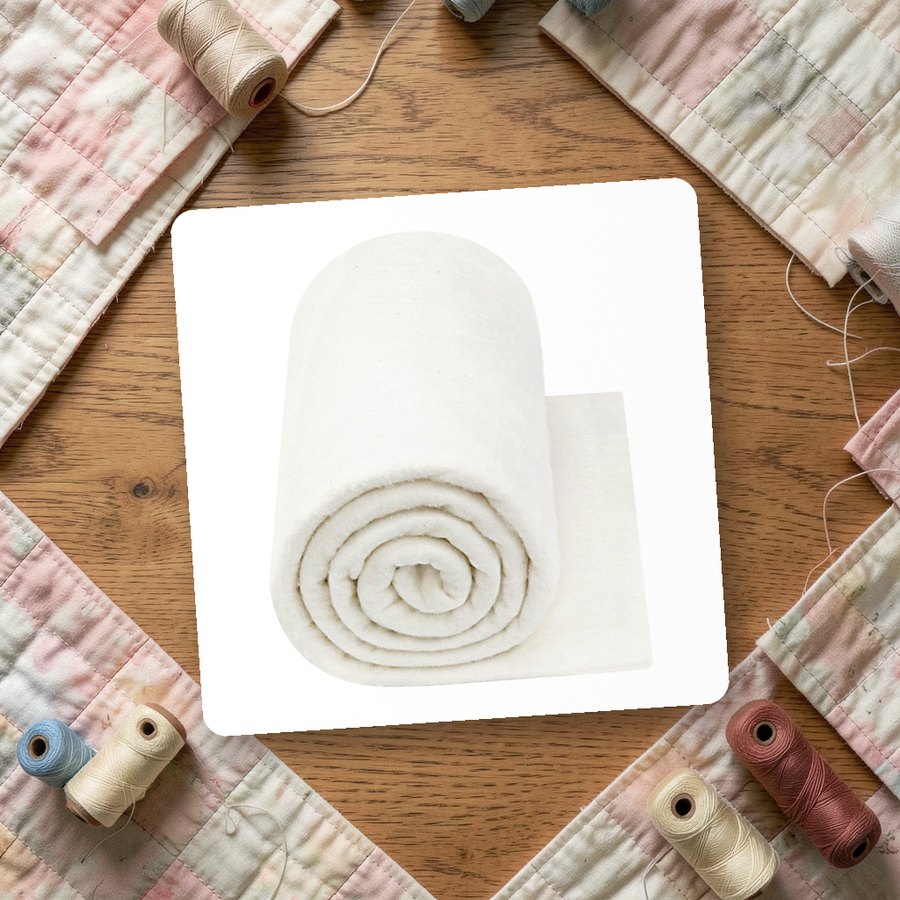 Natural cotton batting, 47 x 59 inchPLANTIONALSee it on Amazon
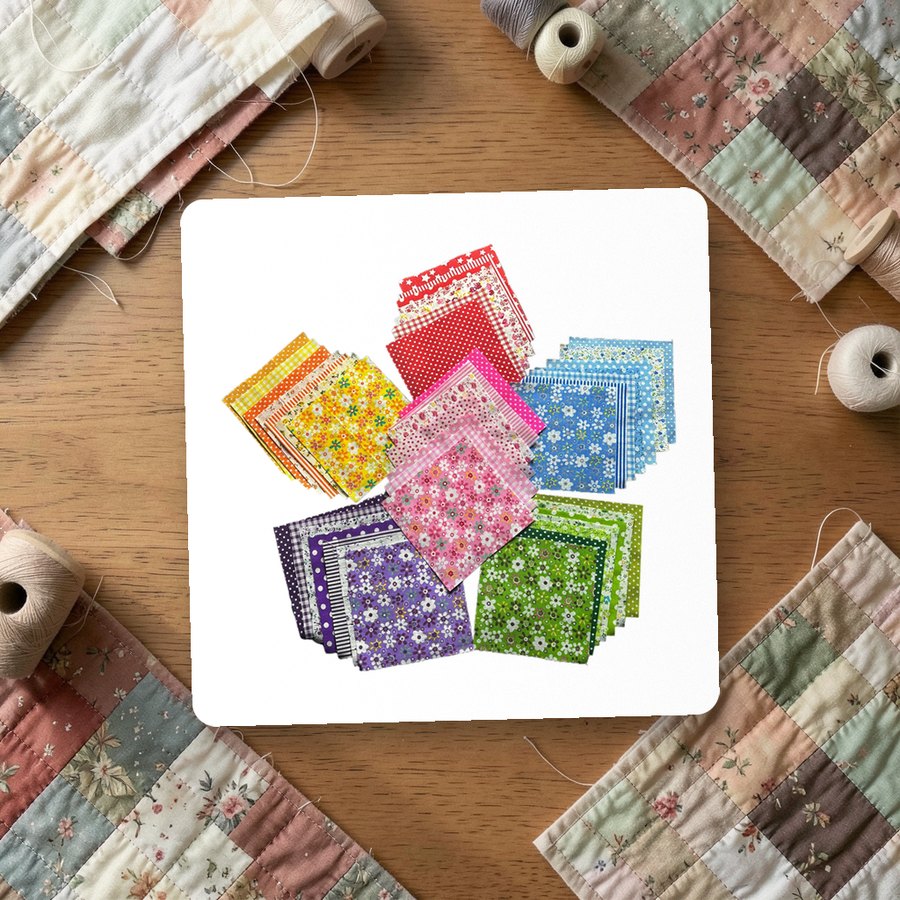 Precut 5-inch cotton squaresMIOIOSee it on Amazon
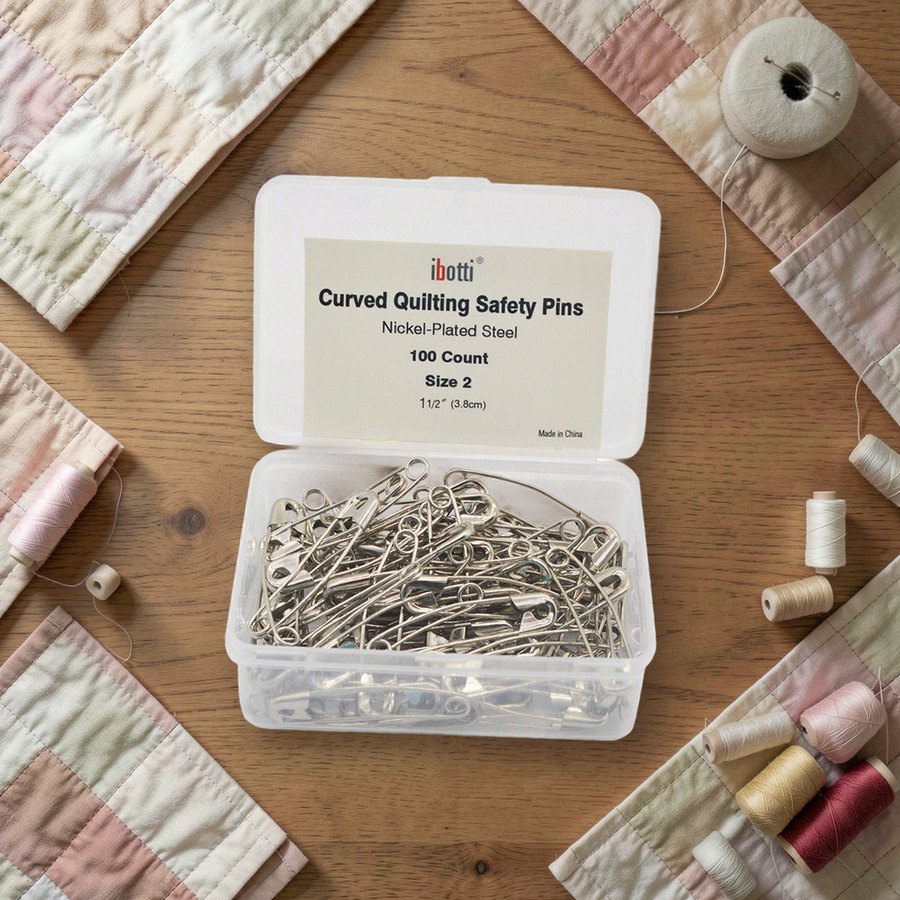 Curved basting safety pinsibottiSee it on Amazon
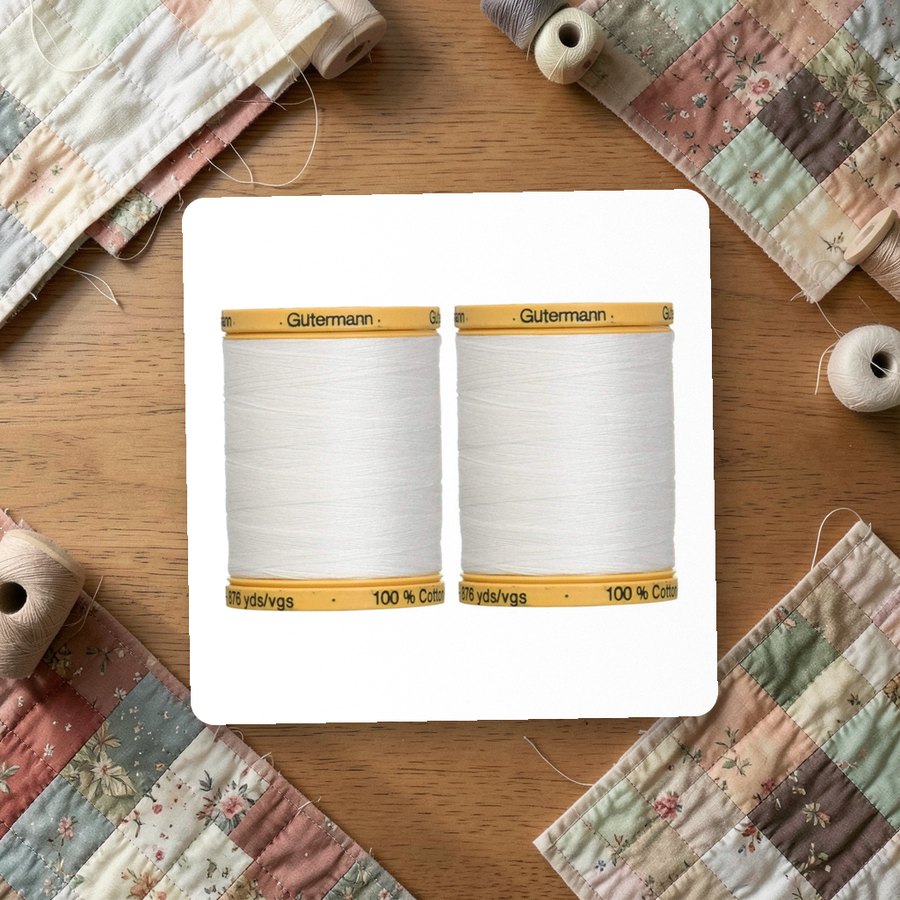 White cotton thread, two spoolsGütermannSee it on Amazon
As an Amazon Associate we earn from qualifying purchases.
Plan Yours
For a 36 x 45 inch quilt, the shopping list is short:
- Top: 80 five-inch squares; or twenty 10-inch squares plus 1/4 yard for the border; or about 1 5/8 yards in total of mixed fabrics for strips.
- Backing: 1 1/2 yards of quilting cotton or flannel, which gives a piece about 42 x 54 inches.
- Batting: a crib-size package, usually 45 x 60 inches, or a piece at least 42 x 51.
- Binding: 1/2 yard for five strips cut 2 1/2 inches wide.
Pick the layout first and buy the fabric to match. For a written pattern, browse the quilt patterns collection and compare each finished size with the table above. A small soft toy with an embroidered face and no small parts makes it a set.
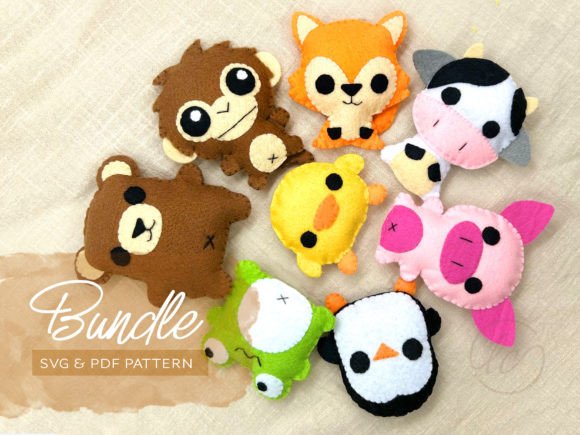 Plush & Stuffed Animal Patterns13 hand-picked · open the collection →
Collections for This Project
Quilt Patterns12 hand-picked · open the collection → Quilt Blocks9 hand-picked · open the collection →